When Every Request Becomes a Threat: Understanding Demand Avoidance
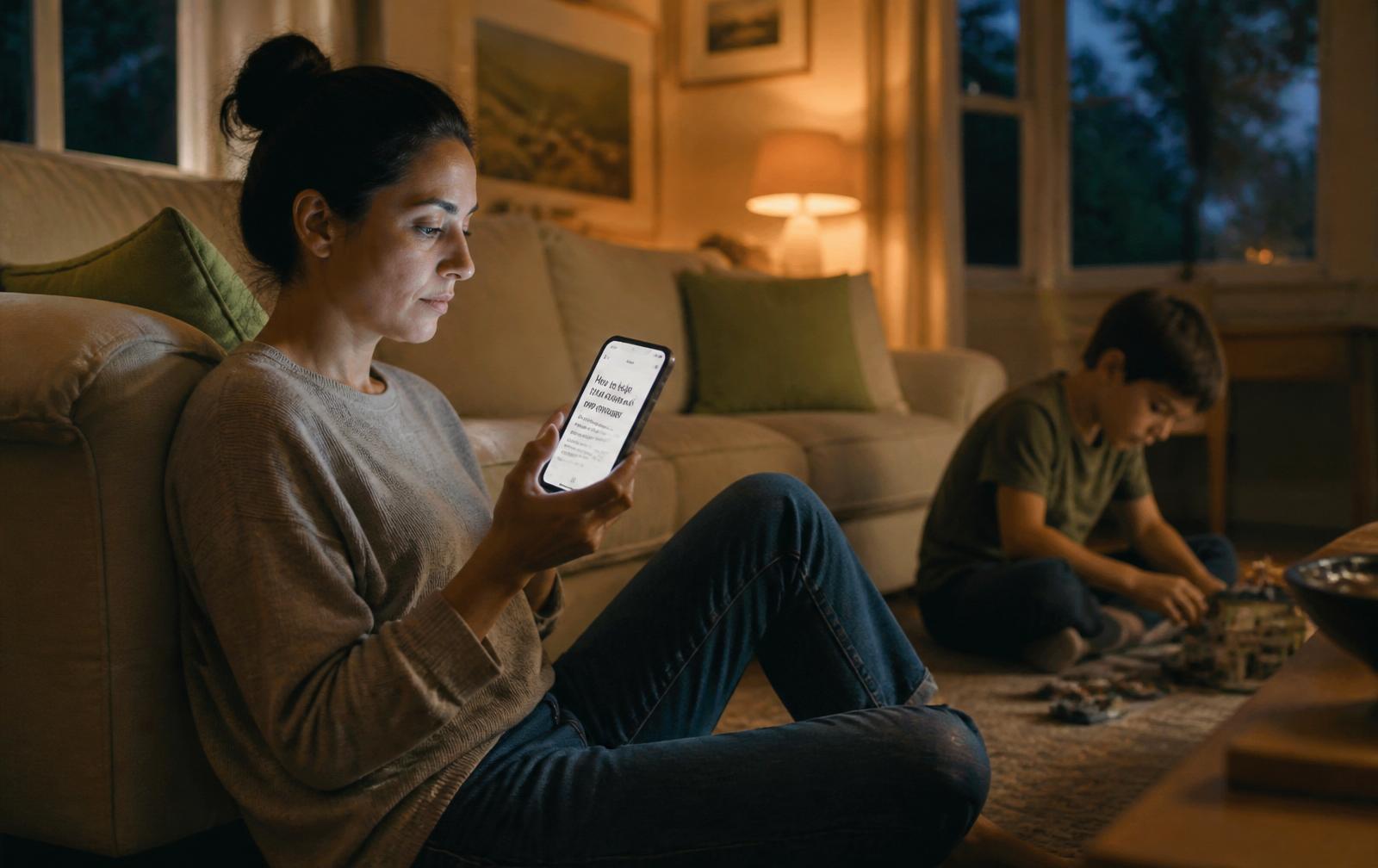
Some children do not refuse because they will not. They refuse because a request — any request, even a welcome one — registers in the body as danger.

Behaviour read as communication, and the calm, consistent responses that change it over time.

Some children do not refuse because they will not. They refuse because a request — any request, even a welcome one — registers in the body as danger.

There are thousands of online parenting classes and almost no way to tell, from the sales page, which ones are built on evidence and which are built on confidence.
Read
By fourteen, control has largely expired and influence is all you have left. The good news is that influence, properly used, is the stronger of the two.
Read
Yelling is rarely a discipline choice. It is what happens when a nervous system runs out of room. Which is good news — because capacity can be rebuilt.
Read
Every time you decide who started it, you teach both children that the way to win is to reach you first. There is a better position to take — and it is not in the middle.
Read
Not crafts to fill an afternoon. Short, repeatable practices that train a child's nervous system to come back down — and the reason most of them fail if you introduce them at the wrong moment.
Read
The child slamming the door is often the most frightened person in the house. Fear and fury run on the same circuit — and at home, only one of them feels safe to show.
Read
By four o'clock a child has already spent six hours regulating themselves in a demanding environment. The worksheet is not the problem — the timing, the tank and the referee's role are.
Read
Consequences are not the problem. Timing is. What we do in the ninety seconds after a child loses control decides whether they learn regulation or learn concealment.
Read
Two people raised in two different families are now improvising a third one. Children can tolerate a great deal of difference between their parents — what they cannot tolerate is being the ground it is fought over.
Read
The fight is almost never about the game. It is about being pulled out of a state that was regulating them, without warning, by the person they trust most.
Read
Mealtimes turn into a contest the moment eating becomes something a child can win or lose. The way out is to stop competing — carefully, and on purpose.
Read
Nobody is difficult in the morning. Everyone is under-resourced at the same time, in a house designed by no one, against a clock that does not negotiate.
Read
A child who lies is almost never a child with a character problem. They are a child solving a problem — usually the problem of what happens next.
Read
Siblings do not fight because something has gone wrong with your family. They fight because you have given them the one relationship they cannot leave — and that is where the real learning happens.
Read
Most of what circulates online is well-meant and half-true. The half that is missing is usually the part that would have protected you.
Read
Pressure is the one ingredient guaranteed to narrow a child's diet. What actually widens it is slower, quieter and far less satisfying to the anxious adult holding the fork.
Read
Almost every parent handles this discovery badly the first time — usually because they respond to the object rather than to the young person holding it.
Read
They see your child for six hours a day in a room with thirty other people. What they notice is different from what you notice — and the gap between the two is where most school problems live.
Read
Shoes, coats, teeth, bags. The school run asks a developing brain to sequence more decisions before nine o'clock than most adults make before lunch — and it is almost never about defiance.
Read
The backlash is not evidence that warmth failed. It is evidence that a generation of parents was sold the warmth and never given the boundaries — or the rest.
Read
Your child is not ignoring you. Their hearing is working perfectly — it is the processing underneath it that has run out of room.
Read
The child who cannot start their homework is not choosing comfort over effort. They are stuck at a step no one has taught them to cross.
Read
Three states that look similar from across the room and need almost opposite responses from you.
Read
Children cannot regulate themselves in a room where no one else is regulated. Co-regulation is the whole mechanism — and it is quieter than it sounds.
Read
The rupture is not the thing that shapes a child. What happens in the two hours afterwards is — and most of us were never taught how to do it.
Read
Not magic words. Short sentences that ask nothing of a brain that currently cannot answer — and a few of the well-meant ones that quietly make things worse.
Read
Almost every difficulty a family brings to therapy is worse on four hours' sleep. Bedtime is not a discipline issue — it is a physiological sequence, and sequences can be rebuilt.
Read
Parents of children with ADHD are told to be more consistent more often than almost anyone. The advice is not wrong so much as aimed at the wrong target — here is what to build instead.
Read
Most of what parents are taught about big emotions happens too late. The window that matters most opens in the first three minutes — and what you do there decides how the next hour goes.
ReadFor parents who want calmer mornings, kinder conversations, and a little more confidence. No promotions, no noise — just insight that fits real life.
Thank you — your first letter arrives on Sunday.