When the Game Ends: Why Screen Transitions Are So Explosive
The fight is almost never about the game. It is about being pulled out of a state that was regulating them, without warning, by the person they trust most.
Written by Sian Trombley · BEd, MACP, CCC
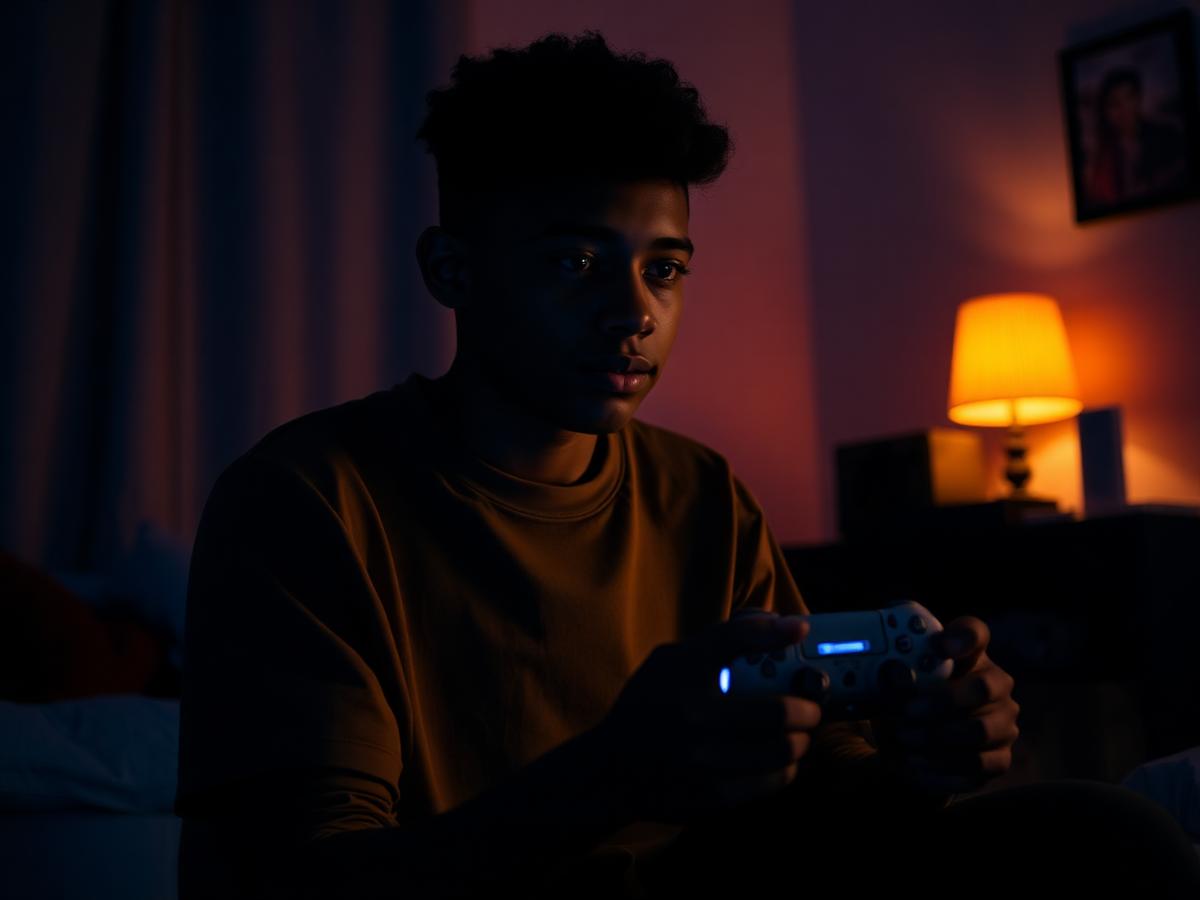
You have said it kindly. You gave a warning. It is a reasonable time and a reasonable request, and somehow you are now standing in a doorway watching a child you love come apart over a controller.
It is tempting to read this as evidence that the game has taken something over. Usually it is simpler and more human: you have interrupted a state of deep engagement and replaced it with a demand, and there was no bridge in between.
What the game is doing for your child
Before designing a limit, it is worth knowing honestly what is being limited. Good games deliver, reliably and immediately, several things that a school day often does not.
- Competence: clear goals, visible progress, and effort that produces results within minutes.
- Autonomy: a space where the child, not an adult, decides what happens next.
- Belonging: for many children, this is where their friendships actually take place.
- Regulation: a predictable, absorbing environment that quiets an overloaded nervous system.
- Recovery: after a day of holding it together in a demanding social setting, this is the decompression chamber.
The Window of Tolerance
Learning, listening and problem-solving only happen inside the window.
- Over
- Window
- Under
Why endings go wrong
Three design faults account for most nightly screen conflict, and all three are fixable without changing the amount of time allowed at all.
- 01The limit is measured in minutes while the game is structured in rounds, so stopping means abandoning something unfinished.
- 02The warning is either absent or purely nominal — five more minutes said from another room, without acknowledgement.
- 03There is no next thing, so the child is being moved from a rich state into an unstructured vacuum, or straight into a chore.
- 01Count in the game's units
Two matches, one level, to the next save point. Ask them how long that actually takes and hold them to their own estimate.
- 02Warn in the room, twice
Go in. Say it. Get an answer back. A warning that was not received is not a warning.
- 03Build a bridge
Sixty seconds of shared attention at the end — a question about the build, the score, the team. This is the whole trick, and it works far more often than it should.
- 04Name the next activity
Something concrete and preferably physical. Endings that lead somewhere are tolerated; endings that lead nowhere are fought.
- 05Follow through without a debate
One restatement, no re-litigation. Predictability is what eventually removes the argument entirely.
The screen is rarely the problem. The transition out of it almost always is.
Sian Trombley, Canadian Certified Counsellor
What you can try this week
Switch to natural stopping points
Agree two more matches rather than twenty more minutes. Games rarely pause where clocks do, and mid-round removal feels like a loss inflicted rather than a limit kept.
Name what comes next, in advance
"After this, we're eating and then walking the dog." A defined next thing turns an ending into a transition.
Do the last five minutes together
Sit down, watch, ask a question about what they're building. Presence at the exit reduces resistance more than any timer.
- Design the ending, not just the allowance.
- Count in rounds, matches or checkpoints — not minutes.
- Every screen session needs a defined next activity.
- Warn twice, at real intervals, then follow through without debate.
- For some children, gaming is where competence and friendship live. Respect that in how you end it.
How do you feel when someone interrupts you mid-task?
What does your child get from gaming that is genuinely hard to find elsewhere?
Is the current rule enforceable by you, calmly, every day?
Printable resources
Recommended Thrive courses

Share this article
This article is educational and is not a substitute for individual clinical advice. Comments are closed so the Journal stays a calm place to read.