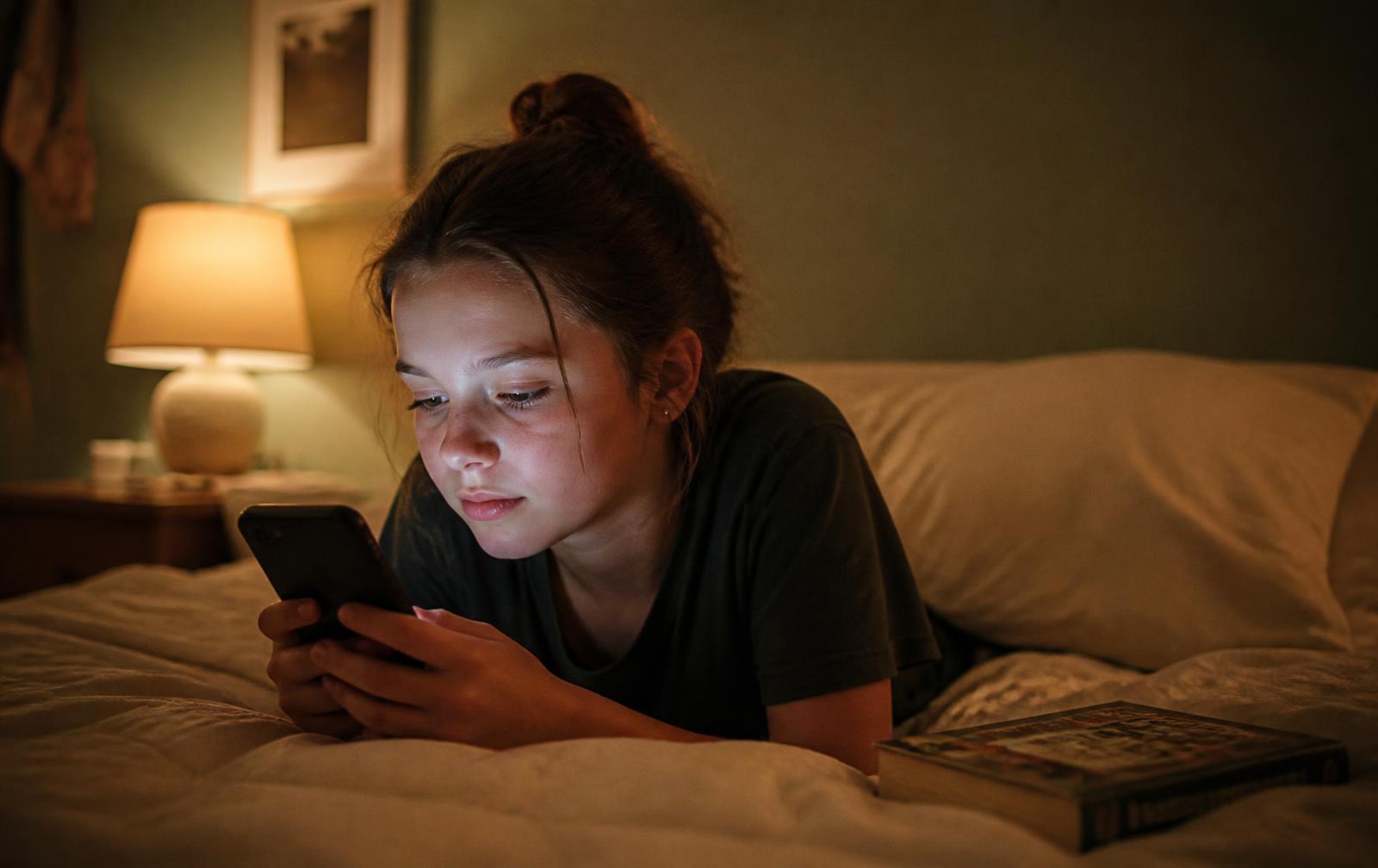
My Child Is Talking to an AI at Midnight
AI companions never get tired, never judge, and never end the conversation. For a lonely child, that is not a gimmick — it is a relationship. Here is how to think about it clearly.

Adolescence as a second period of enormous brain development, and how to stay a safe base through it.

AI companions never get tired, never judge, and never end the conversation. For a lonely child, that is not a gimmick — it is a relationship. Here is how to think about it clearly.

Your teenager is not staying up late to defy you. Their body clock has genuinely moved — and almost everything else you are worried about runs downstream of this.
Read
By fourteen, control has largely expired and influence is all you have left. The good news is that influence, properly used, is the stronger of the two.
Read
Teenage depression rarely announces itself as sadness. More often it arrives as irritability, exhaustion and a slow withdrawal that looks, from the outside, like an ordinary phase.
Read
It is almost never defiance, and it is very rarely about the lessons. A clear-eyed guide to the mornings that stop working — and the plan that gets a child back in.
Read
The conversations that work almost never happen face to face, rarely start with a question, and are usually about something else entirely.
Read
The hours matter far less than what is displaced. A workable family plan protects sleep, movement and conversation — and then stops arguing about minutes.
Read
Millions of children now talk daily to something that always answers, never tires, and never disagrees. What that does to a developing mind is the question of this decade.
Read
Adolescence has always involved measuring yourself against other people. What is new is the scale, the precision, and the fact that it never closes.
Read
Of all the decisions families make about technology, where the device sleeps has the largest and most measurable effect on a child's wellbeing.
Read
Almost every parent handles this discovery badly the first time — usually because they respond to the object rather than to the young person holding it.
Read
The horizontal teenager on the bedroom floor is rarely refusing to start. They are stuck at the point where the size of the task has exceeded their capacity to enter it.
Read
Boys are not becoming less emotional. They are becoming less practised at showing it — and the window in which they let an adult in is narrower than most parents realise.
Read
Not melting it, not rewiring it beyond recognition. Something quieter and more consequential: shifting what their attention expects, and how much stillness they can tolerate.
Read
Silence at fifteen is rarely rejection. It is a developmental task, a bid for privacy, and sometimes a signal — and it responds to presence far better than to questions.
Read
The question is not how many hours. It is what the hours are doing — and whether your child has anywhere to bring what they find there.
ReadFor parents who want calmer mornings, kinder conversations, and a little more confidence. No promotions, no noise — just insight that fits real life.
Thank you — your first letter arrives on Sunday.